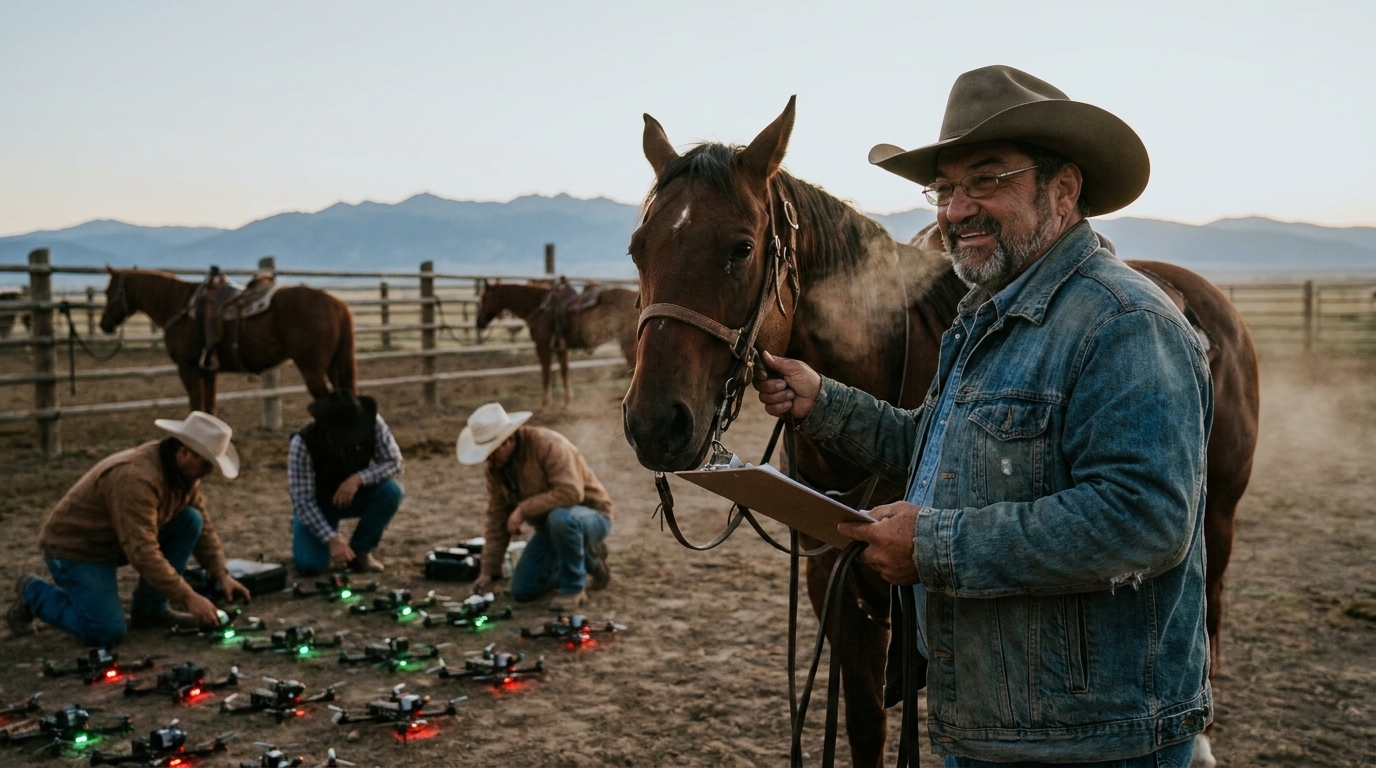
We left out of the holding pasture south of town a little after four in the morning. Two hundred head of small commercial drones — mostly Mavic 3s and a string of Autel EVO Lite+ that belong to a client out of Cedar City — and the four of us riding alongside: me, my brother-in-law Royce, my hand Travis, and a kid named Brigham who'd been working at the Maverik in Spring City and asked if he could come along for a real drive. We let him come. You bring kids on a drive when you can. They learn faster in the dust than they ever do in a classroom.
The drones don't herd quite like cattle. People always want me to say they do, because that's the picture in their head. They don't. A herd of beeves moves like one big slow muscle. A herd of two hundred drones moves like a school of fish that's all having different ideas at the same time. You have to keep them low — fifteen, twenty feet off the deck — because the wind drifts get unpredictable above that, and you don't want a stray getting up into commercial airspace. You also have to keep them tight. A loose herd is a lost herd. Half the work of a drive is just keeping the formation honest.
We had them in three loose strings, one for each of us with a rider's lead. Royce had the point. He rides the prettiest gray gelding you've ever seen, name of Wilford after Wilford Woodruff, and he's got a hand for the lead drones — the ones that decide where everybody else goes. He's working a little controller on a chest harness, soft-handed, just nudging the alpha birds south-southwest along the old wagon route the freighters used to take down through Holden and across the desert. The other drones follow them. You don't have to fly all two hundred. You fly four or five and the rest fall in.
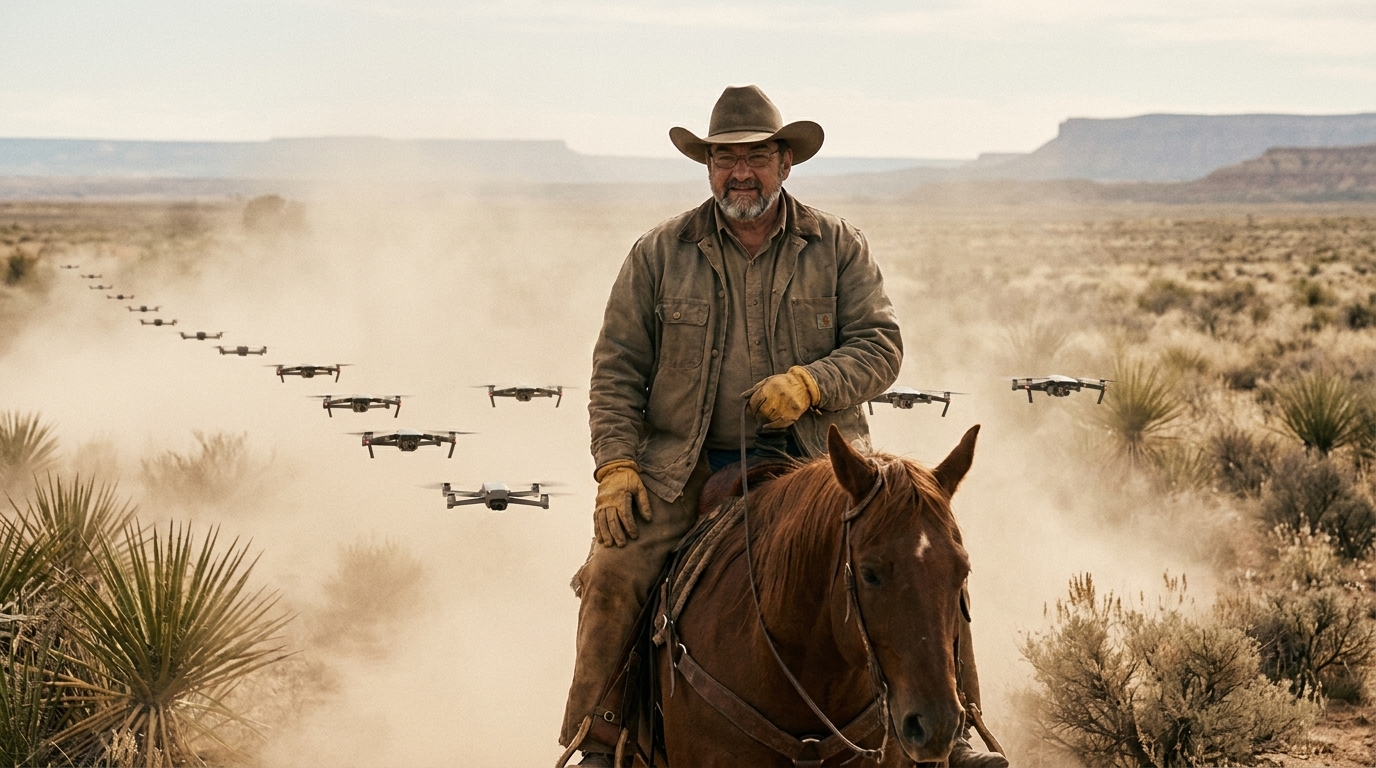
I had the swing — that's the middle of the herd. My job is to keep the middle from bunching up or wandering off. I had Brigham riding with me so I could show him how to read a herd. About an hour in, the kid pointed at one drone that was drifting slightly east of the rest, just sort of sliding off the line.
"That one wants to break," he said.
"That's right," I said. "Watch what he does."
The drone went out about fifteen yards. Then he turned, like he was checking to see if anybody was paying attention. Then he started peeling toward the east at a pretty good clip.
"Now you watch this," I said.
Royce had seen him from the point. He didn't even turn his head. He flicked his thumb on his control stick — one little correction — and the alpha he was leading shifted just two degrees south. The whole herd shifted with it, including the runaway. The runaway never made it east. He fell back into the line and went where everybody else went. Brigham just stared.
"That's why he's on point and you're not," I said.
We made it down past the Sevier turnoff by midmorning. We watered the horses at a stock tank Royce's uncle keeps full down there, and we let the drones settle for forty minutes. You don't water drones, but you do let them sit — you bring them down to about three feet off the deck, throttle them back to standby, and they hum quietly in the grass like resting hens. You walk through them and look. You're looking for damaged rotors, bent landing gear, GPS lock issues, any of the little battery flags that mean a particular bird won't make the rest of the day. We pulled four out of the herd at that stop and put them in the cull crate on the truck. Travis was running the truck behind us, hauling water for the horses, a small generator, and a half a hundred spare batteries.
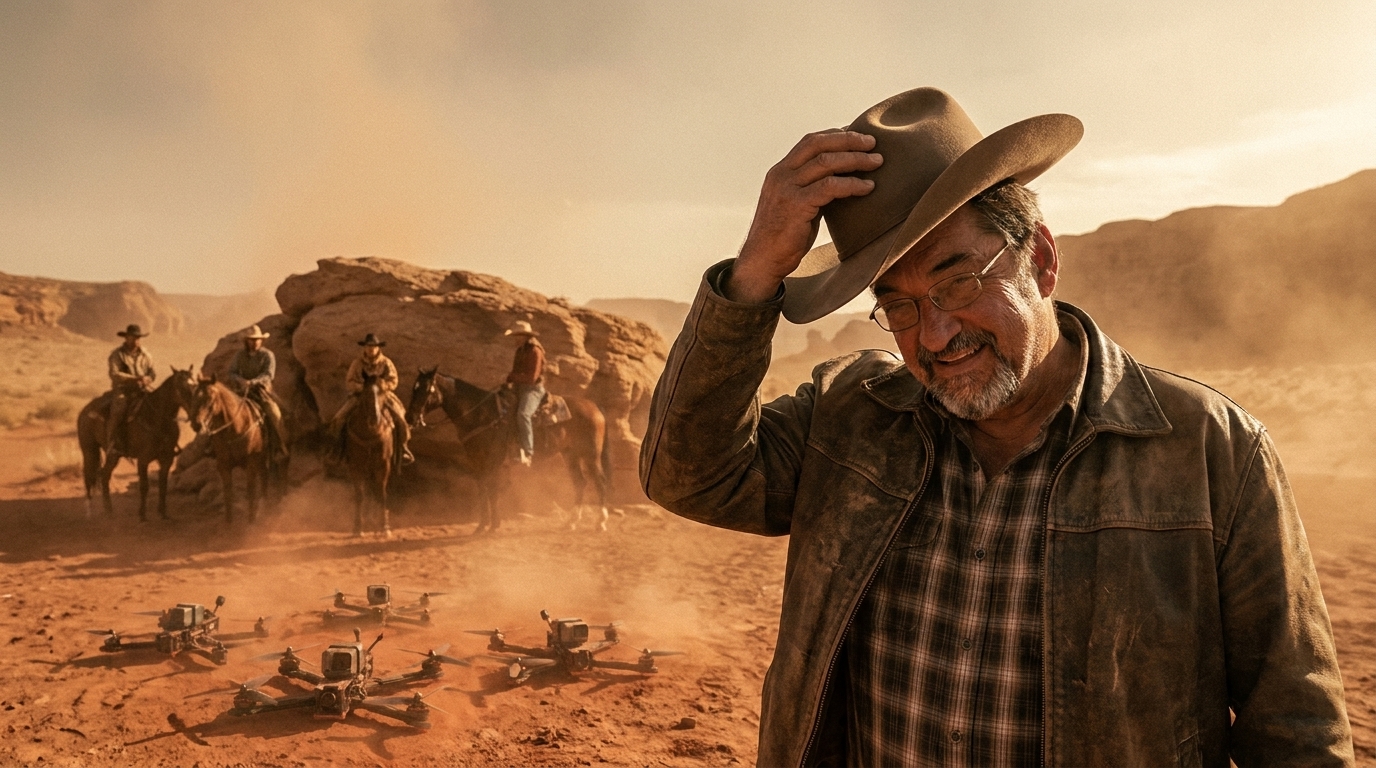
By two in the afternoon we were across the Beaver County line and the wind started picking up out of the southwest — a real ugly wind, the kind that throws dust into your teeth and makes the small birds unstable. I called a stop and we brought the herd down low into a wash for shelter. We laid them out in a tight grid and powered down the non-leads. Royce kept his five alphas warm on standby. The horses didn't like the wash much — the walls were close and the wind echoed funny — but they settled when Royce hummed at them, which he always does.
I'd brought sandwiches from Pyper's in Mount Pleasant. Roast beef on a hard roll, the way my granddad used to eat them. Brigham asked if it was alright if he said a blessing on the food and we all took our hats off and he said one. Short and good. Royce said amen and Travis said amen and I said amen and the dust kept blowing.
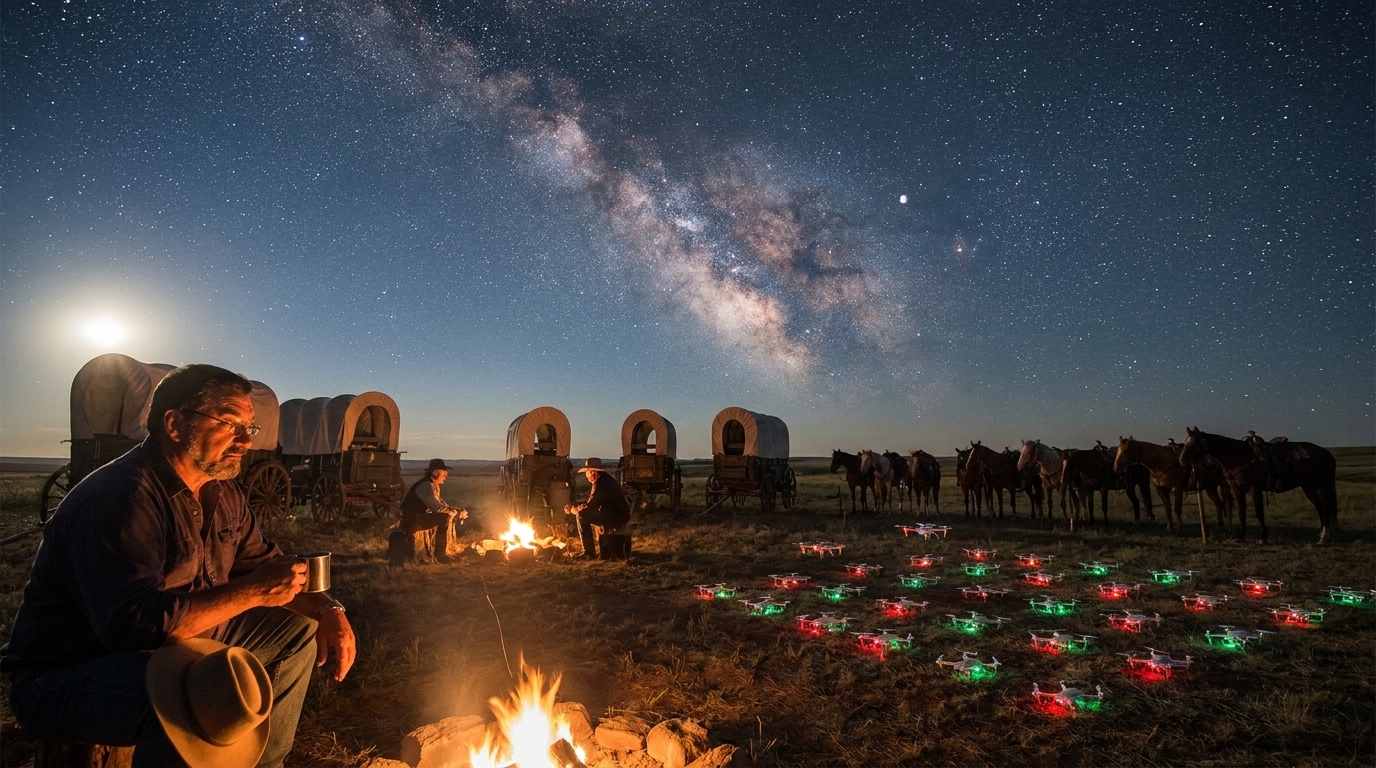
When the wind slacked off about four-thirty, we got the herd back up and pushed them another twenty miles before sunset. We camped that night in a draw south of Milford, fires up, a remuda picketed about a hundred yards off, and the herd settled in their grid with their little status lights blinking soft green and red against the sage. I sat up with Royce for the first watch and we didn't say a whole lot. There isn't a lot to say on a clear Utah night with two hundred drones standing watch and the Milky Way doing what it does.
Brigham slept hard. Travis sang one verse of a hymn before he went out, real soft, and that was the end of the first day of the drive. We made Vegas on Thursday. The client paid clean. The drones all made it but for three we replaced under the policy and one we lost in a downdraft outside St. George that we never could find. I told him we'd refund that one and he said don't worry about it, the bird was insured anyway.
That's a spring drive. That's the work.