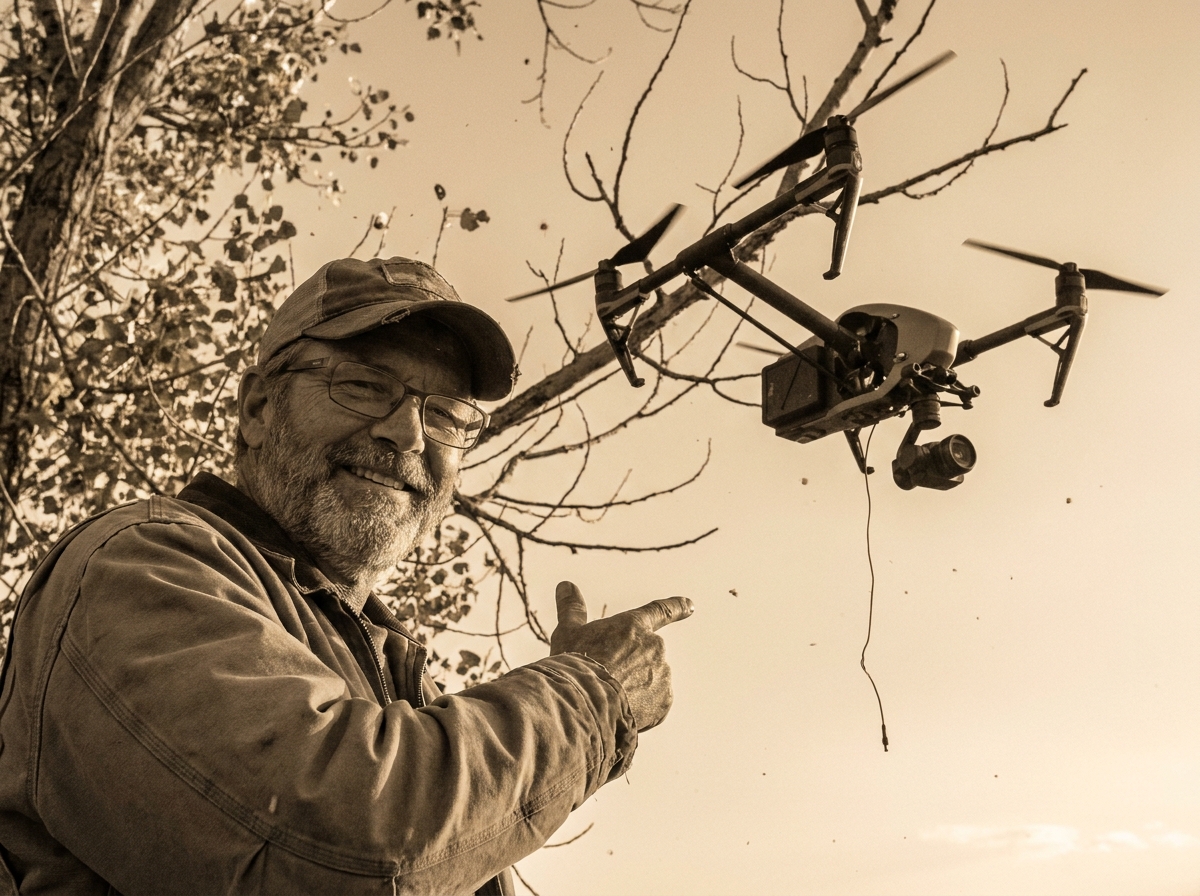
Got the call Tuesday morning before I'd finished my coffee. A man out of Salina named Lon Stewart had lost an Inspire 3 — a four-thousand-dollar bird with a Zenmuse camera on it — somewhere down in the Sevier River bottom east of Aurora. He'd been running survey footage for a hay co-op and the bird had gone unresponsive in a gust and dropped, and the last known GPS hit was somewhere in three square miles of cottonwood, willow brush, and irrigated bottomland. By the time he called me he'd already been out searching for two days with his nephew and a cousin and they hadn't turned up so much as a propeller.
I told him I'd be there by noon and to have a sandwich ready for me because the recovery would probably take the rest of the day. He said he'd have his wife make me one. I said tell her I'm not picky.
Recovery is the quietest kind of work I do. It's not a drive — there's no herd to move. It's not a camp — there's no kids to teach. It's just you, your horse, your tracking gear, and a piece of ground that's swallowed something that doesn't want to be found. The Sevier bottom is hard country to search. The cottonwoods are thick along the banks, the willows are thicker still down the side channels, and the irrigation cuts run every direction like somebody dropped a plate of spaghetti on a map. You can ride a square mile of it and miss a downed bird by ten feet because the willow brush is over your head when you're horseback.
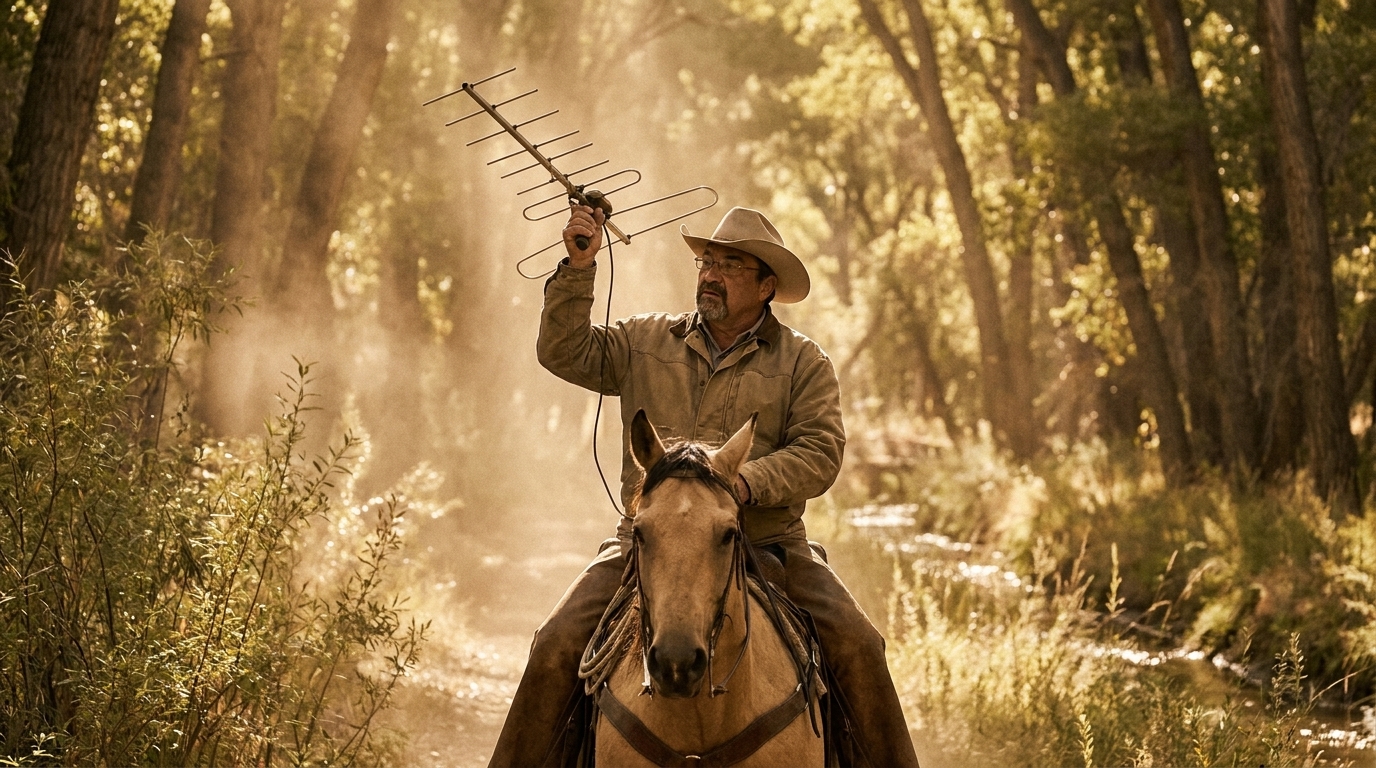
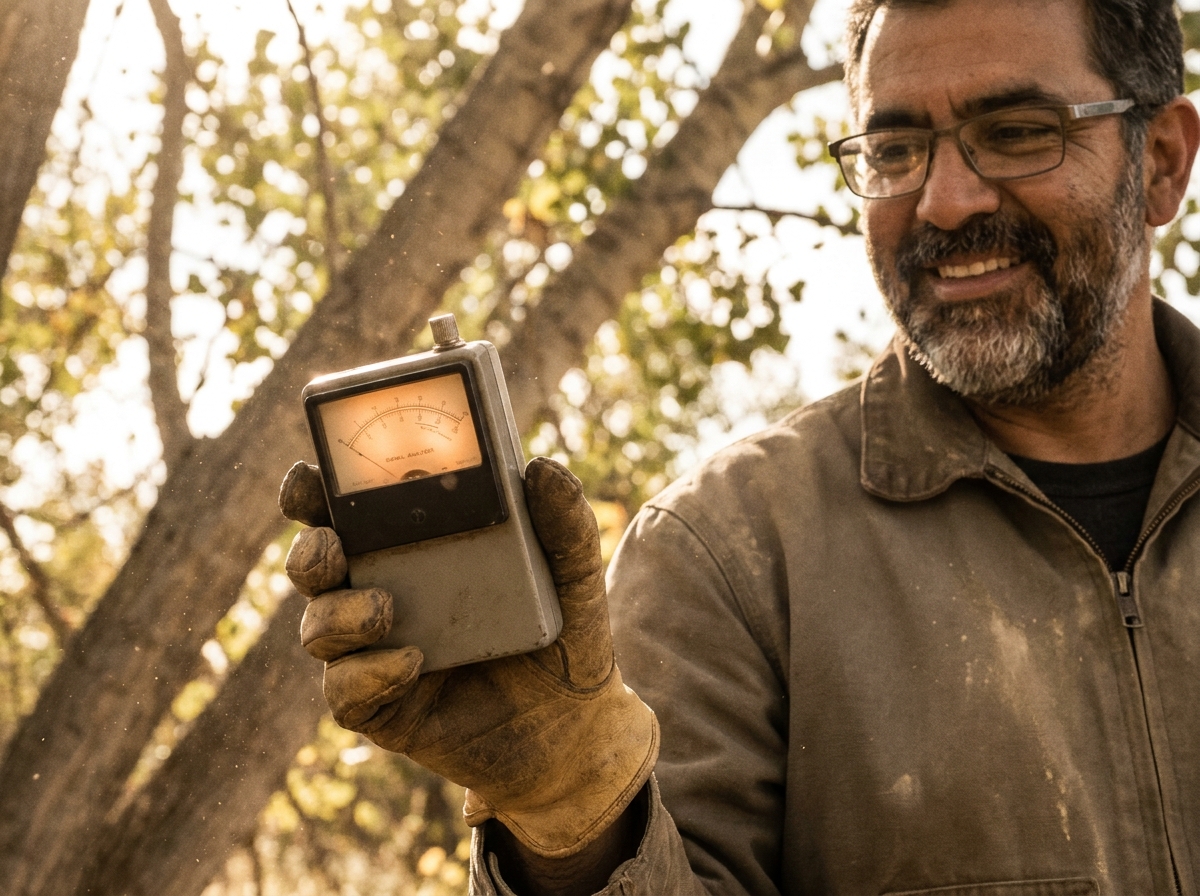
I packed up Bishop — that's my main horse, a fourteen-year-old buckskin gelding with a head like an anvil and the patience of a saint — and threw my tracking kit on the saddle. The tracking kit is one canvas bag with a handheld signal analyzer, a directional antenna that looks like a small TV aerial from 1972, a pair of binoculars, a sat-com radio, and a flashlight. I also brought a hand axe and a folding pole saw because in the willow you sometimes have to make your own road.
Lon met me at the gate of the bottom pasture and we shook hands. He's a good man — I knew him through my granddad, who used to run a few head of cattle on shares with Lon's father in the seventies. He pointed me down at the river and gave me the last known coordinates on a printed map. He'd already cleared it with the farmers whose ground I'd be riding. Mrs. Stewart handed me a tin foil package and inside it was a ham sandwich, an apple, and a brownie. Bless her.
The first thing you do in a recovery is climb up to high ground and try to pick up the signal. Most modern birds, even when they crash, still broadcast a faint position beacon for two or three days on a separate channel from the main flight radio. The Inspire 3 is good for about forty hours on the recovery beacon. Lon's bird had been down for sixty hours when I got there. Coin flip on whether it was still talking.
I rode Bishop up to the bluff above the bottom and pulled the analyzer out. I swept the antenna in a slow arc. Nothing on the first sweep. Nothing on the second. On the third sweep I caught a flicker — a real faint flicker, the kind that could be a real signal or could be a hot pixel on the screen. I noted the bearing and rode about a quarter mile north along the bluff and swept again. The flicker was there, at a different bearing. Two bearings, two locations, intersecting lines on the map. That's all you need.
Their intersection put the bird about two hundred yards into the worst of the willow brush, halfway between two irrigation cuts. So down we went.
I'm going to skip past the part where Bishop and I spent the next two hours in willow up to my shoulders, because there's nothing to say about it that's interesting. I'll just tell you that the willow brush in the Sevier bottom in mid-June has more mosquitos in it than you've ever seen in your life, and that Bishop kept his ears flat the whole time and never once tried to turn around, which is why he's worth what I paid for him.
We found the bird about three in the afternoon. It had come down hard in the upper branches of a half-dead cottonwood and one of the propeller arms was snagged on a broken limb about eighteen feet up. The camera gimbal was hanging by its ribbon cable. The whole thing was swaying gently in a little wind, looking for all the world like a wounded hawk caught up in a tree.
I tied Bishop off, climbed the tree, cut the bird loose with a knife, and lowered it down with a length of cord from the saddle bag. Then I climbed back down, packed the bird in a foam-lined box I'd brought for exactly this purpose, and called Lon on the sat-com. I told him to start his truck and meet me at the southeast corner of the upper pasture in about forty minutes. He said he'd be there. He brought a thermos of black coffee with him. I drank two cups standing next to my horse.
The bird was repairable. The gimbal was shot but the airframe was fine and the memory card had survived, which meant the survey footage Lon needed was still there. He paid me in a folded check on the spot and said God bless you, brother, and I said yes sir, He has.
That's a recovery job. That's a Tuesday.